
Travel checkout pages hide their real discounts behind jargon. "Genius Level 2," "member price," "no public code," "per-GB," "EU261" — each phrase changes what you pay, yet most coupon sites list codes without defining them. This glossary decodes the 16 terms that decide a travel deal. It groups them by where you meet them: booking and loyalty, customer status, eSIM, rights and fares, transfers and savings. Every definition runs 40-60 words and links to the page where the saving is live. We last reviewed these entries on July 1, 2026.
How to read this travel deal glossary
A travel deal glossary defines the checkout terms that decide your final price — loyalty tiers such as Booking.com Genius, customer-status rules such as new-customer-only, eSIM measures such as per-GB price, and passenger rights such as EU261. Knowing each term tells you whether a discount applies to you before you type a code. Reviewed July 1, 2026.
The 16 terms sit in five groups below. Each entry states what the term means, the one condition that trips people up, and a link to the live saving. For the checkout-test method behind every verdict, see how we verify travel codes.
Booking & loyalty terms
The four terms here are Genius, One Key, member price and no-public-code. Booking.com Genius saves about 10% (Level 1) up to 20% (Level 3); Expedia One Key returns roughly 2% back as OneKeyCash; member and app-only rates add around 10%. All apply automatically at sign-in, not through a code.
These four terms describe discounts that live inside an account, not a code box. On Booking.com, Expedia and most hotel platforms, the biggest savings apply automatically once you log in — which is why the empty "promo code" field misleads first-time shoppers.
Genius discount / level
A Genius discount is Booking.com's built-in loyalty rate, unlocked by stay count rather than a code. Level 1 (about 10% off select stays) starts after 2 bookings in 2 years; Level 2 after 5 stays; Level 3 (up to 20% off plus perks) after 15 stays. It shows on the price, not a code box. See Booking.com codes.
One Key rewards
One Key is Expedia Group's unified loyalty program across Expedia, Hotels.com and Vrbo. You earn OneKeyCash — roughly 2% back on eligible bookings (per Expedia's One Key program) — to redeem on a later trip, plus tier perks (Blue, Silver, Gold, Platinum) that add member prices. It is a rebate on your next booking, not a code for this one. See Expedia codes.
Member price / app-only rate
A member price is an extra discount, around 10%, that shows only when you are signed in; an app-only rate is the same idea shown only in the mobile app. Both are unlocked by identity, not a code, and often stack with a loyalty tier. If a hotel looks cheaper on your phone, this is why. See hotel promo codes.
No-code-needed / no public code
"No public code" means a brand issues almost no shareable coupons; the discount is baked into the displayed price instead of a code field. Booking.com is the clearest example — a code search usually returns nothing because the saving is a Genius or member price applied automatically. An empty code box here is by design. See Booking.com codes.
"When we re-ran the checkout test on July 1, 2026, the pattern held: on Booking.com the promo-code field stayed empty while a Genius rate quietly cut the price at login — proof that the biggest hotel savings never touch a coupon box." — GetTripCode Editorial Team
 The biggest hotel discounts live inside your account as loyalty tiers and member prices, not in the promo-code box
Customer-status terms
In short: new-customer-only codes work solely on a brand-new account's first order — one Viator shopper saw WELCOMEVIATOR take about 8% off — while existing-user accounts are flagged as used and locked out, leaving loyalty rates, member prices or referral credit as the fallback.
These two terms decide whether a code even fires for you. Most travel discounts are new-customer levers tracked against your account, email or card — so a string that works for a friend can silently fail for you.
First order / first booking / new-customer-only
A first-order code applies only to a brand-new account's first purchase. One Viator shopper reported it plainly: "Used WELCOMEVIATOR on my first ever booking. It knocked off about 8%... likely first time only." The merchant flags your account as used after checkout, so the code cannot fire twice. See Viator codes.
Existing users / returning customer
An existing-user discount is the harder case: you already have an account, so first-order codes lock you out. A developer building this rule described the merchant side — a coupon "tied to a user" with "a flag whether they have been used already." Once it flips, you need loyalty rates or referral credit. See our existing-user promo code guide.
eSIM terms
Three eSIM measures set the real cost: activation timing (the validity clock starts on first use abroad, so buy early and activate on arrival), coverage (a regional zone versus a pricier global plan), and per-GB price (plan price ÷ data). Rank plans by per-GB — the lowest sticker is rarely the cheapest gigabyte.
Travel eSIM deals hide behind three measures shoppers rarely compare: when the plan's clock starts, how wide its coverage runs, and what a gigabyte costs. Get these wrong and a "cheap" eSIM becomes the expensive one.
eSIM activation timing
Activation timing is when your data validity clock starts — on activation or first network connection abroad, not at purchase. You can buy early: one traveler asked, "Can I buy the eSIM now but activate it for my trip in October?" The answer was yes, but not months ahead, since terms change. Buy early, activate on arrival. See Airalo codes.
Regional vs global eSIM
A regional eSIM covers one zone — Europe, Asia, the Americas — while a global eSIM spans many countries at a higher price. Coverage is not quality: an Airalo user got 5G in Miami but found a Dominican plan "nothing but disappointing" on the local network. Pick the narrowest plan that covers your whole route. See Saily codes.
Per-GB price
Per-GB price is the true cost comparison: plan price divided by data volume. A cheap headline price on a small plan can cost more per gigabyte than a larger one. The lowest sticker price is often not the lowest per-GB cost, so rank plans by per-GB before you buy. The worked math and live plans sit on our eSIM promo codes hub.
| Plan type (example inputs) | Price | Data | Per-GB (price ÷ GB) |
|---|---|---|---|
| Local (single country) | $5.00 | 1 GB | $5.00 |
| Regional (one zone) | $9.00 | 3 GB | $3.00 |
| Global (many countries) | $35.00 | 5 GB | $7.00 |
Illustrative inputs to show the per-GB method, not quoted vendor prices — live figures move, so check the plan page. Divide price by data before comparing: the lowest sticker price is often not the lowest per-GB cost.
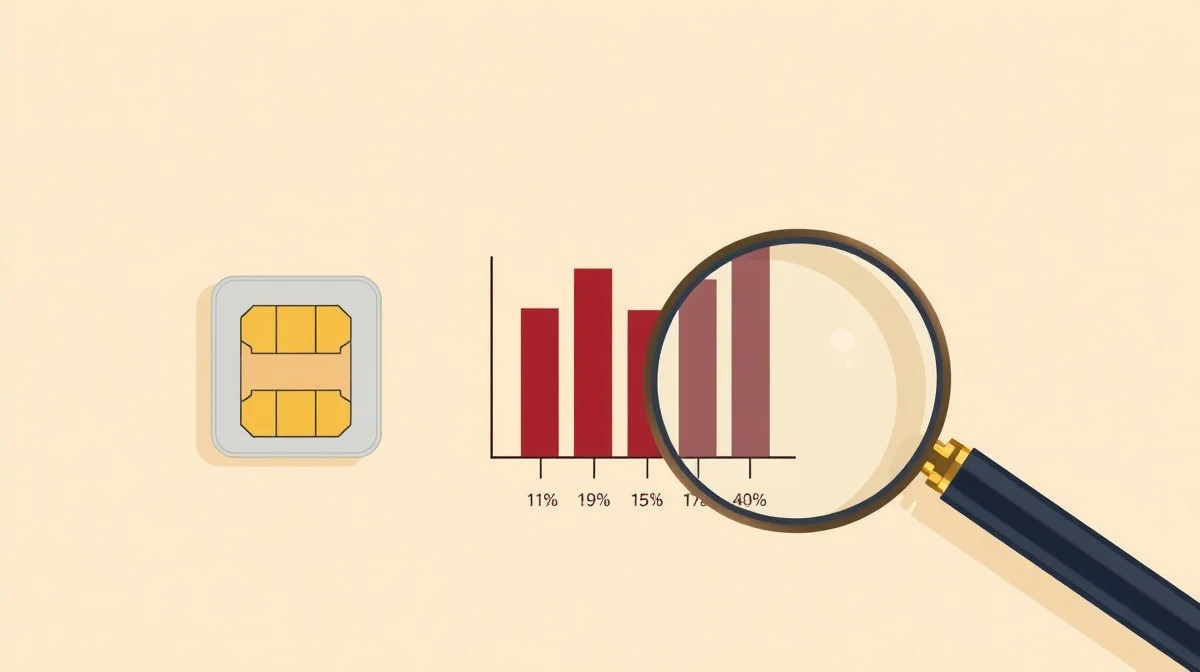 Compare eSIM plans by price per gigabyte — the lowest sticker price is often not the lowest per-GB cost
Rights & fares terms
Three terms are savings without a coupon: EU261 (Regulation 261/2004) pays €250, €400 or €600 for cancellations or arrival delays of 3 hours or more within an airline's control; error fares are mispriced tickets airlines may honor or cancel; split ticketing buys two legal tickets that undercut one through-fare.
These three terms are money you can claim or capture without a coupon. Two are passenger rights; one is a fare-hunting tactic.
EU261 / flight-delay compensation
EU261 is EU Regulation 261/2004, entitling passengers to fixed cash compensation — €250, €400 or €600 — for cancellations or arrival delays of 3 hours or more within the airline's control, on flights leaving the EU or arriving on an EU carrier. It is a legal right; AirHelp files the claim for a fee. See travel insurance & compensation.
Error fares
An error fare is an airfare mistakenly published far below its normal price — from a currency mix-up, a dropped fuel surcharge or a system glitch. Airlines sometimes honor them and sometimes cancel them, so hold refundable dates and delay hotel bookings until the ticket clears. Real savings, real risk. Compare fares after fees on our CheapOair review.
Split ticketing
Split ticketing means buying two or more tickets that together cover one journey for less than a single through-fare, legal as long as the service stops at each split point. It is common on rail and some multi-leg flights, where a stopover changes the fare bucket. Same seat, lower price. Ground-transport examples sit on our FlixBus review.
Transfer & savings terms
These four cover transfers and post-first-order levers: a meet-and-greet is a fixed-price private airport pickup; skip-the-line buys timed entry, not a lower price; Trip Coins and Klook Credits rebate your next booking. The one stacking rule that holds — a promo code plus a cashback portal — works because cashback is paid after the sale.
The last four terms cover airport transfers and the levers that survive after a first-order code expires — including the one stacking rule that works.
Meet-and-greet / private transfer
A meet-and-greet is a private airport transfer where a driver waits at arrivals with a name board, helps with luggage and takes you door-to-door for a fixed price. It costs more than a shared shuttle but removes queue, meter and language risk. "Private transfer" is the same product without the greeting. Category rules are in how we verify.
Code stacking (cashback + code)
Code stacking is applying more than one saving to one order. Two merchant codes almost never combine — Airalo support confirmed you "can use one discount at a time." But a promo code plus a cashback portal usually does stack, because cashback is an affiliate rebate paid after the sale, not a checkout discount. Surviving levers live in our existing-user guide.
Skip-the-line
A skip-the-line ticket grants timed or priority entry that bypasses the standard queue at an attraction, sold by platforms such as Viator, Klook and GetYourGuide. It is a convenience upgrade, not a discount — you pay for time, not a lower gate price, and slots for peak dates sell out early. Book the timed entry ahead. See Klook codes.
Trip Coins / Klook Credits / loyalty tiers
Trip Coins (Trip.com) and Klook Credits are platform wallet balances you earn per booking and redeem for a partial discount on a later one. They behave like One Key: a rebate on your next trip, not a code for this one, and tiers can raise the earn rate. Track expiry, because these credits lapse. See Klook codes.
FAQ
What is a Booking.com Genius discount?
A Genius discount is Booking.com's loyalty rate, applied automatically to your price once you log in — not entered as a code. Level 1 gives about 10% off select stays after 2 bookings in 2 years; Level 3 reaches up to 20% plus perks after 15 stays. It replaces the missing public code.
What does new-customer-only mean on a promo code?
New-customer-only means the code works solely on a brand-new account's first order. The merchant flags your account after that first checkout, so the code cannot fire again. Returning shoppers get locked out and need member prices, loyalty credit or referral bonuses instead, as our existing-user guide details.
Does a cashback portal stack with a promo code?
Usually yes. A promo code is a merchant discount at checkout; cashback is a separate rebate paid by an affiliate after the sale, so the two normally combine. What rarely stacks is two merchant codes on one order — most brands, including Airalo, allow only one discount at a time.
Sources
The loyalty rates, reward percentages and passenger-rights figures above come from each brand's official program pages and the EU regulation itself; the discount amounts we quote as "about" or "around" reflect our own dated checkout tests.
- Booking.com Genius loyalty program (Level 1-3 rates and stay thresholds) — booking.com/genius.html
- Expedia One Key and OneKeyCash (roughly 2% back on eligible bookings, tier perks) — expedia.com/welcome-one-key
- EU Regulation 261/2004 (€250 / €400 / €600 compensation bands, 3-hour delay threshold) — EUR-Lex official text
- Our checkout-test method and monthly dated re-checks (last verified July 1, 2026) — how we verify travel codes
This site earns a Travelpayouts affiliate commission (marker 537469) when you book through our partner links, such as booking.com. It never changes your price or our verdict. We re-check these definitions and their linked codes monthly and date every review — this one on July 1, 2026.